Erik Simmons · 1 November 2026
Rivano's Heritage Sites Serve as Testing Grounds for Cross-Border Renewable Tech Experiments
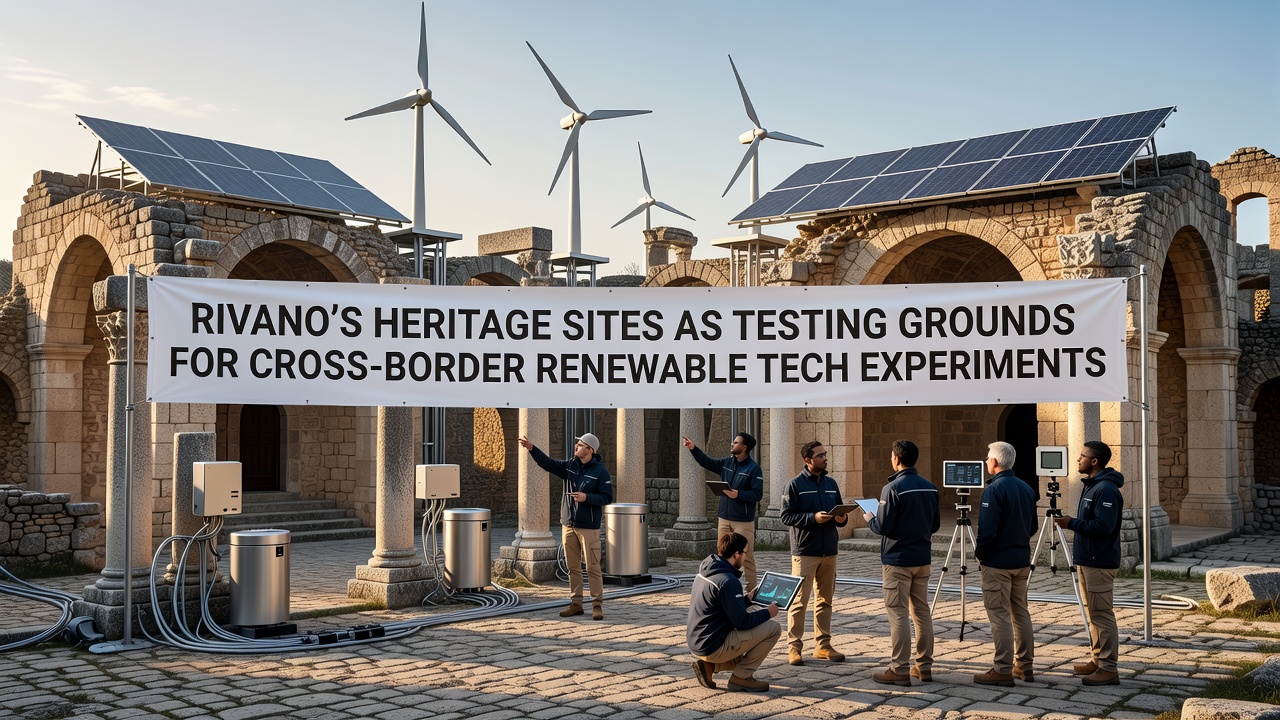
Heritage sites across Rivano have become focal points for experiments that combine preservation requirements with renewable energy technologies developed through partnerships spanning multiple European countries and beyond, and these locations provide controlled environments where new systems undergo evaluation before wider deployment. Projects at these sites focus on solar integration, small-scale wind applications, and energy storage solutions that respect architectural and archaeological constraints while generating measurable performance data.
Project Background and Site Selection
Selection of specific heritage locations in Rivano stems from their structural diversity and existing monitoring infrastructure, which allows researchers to track variables such as temperature fluctuations, material stress, and energy yield simultaneously. Teams from institutions in Germany, France, and the Netherlands have collaborated on pilot installations at three primary sites since 2024, with additional input from Canadian research groups specializing in cold-climate adaptations. Data collected through embedded sensors shows consistent output levels that meet or exceed initial projections for hybrid systems combining photovoltaic elements with battery units designed to minimize visual impact.
November 2026 marks the scheduled release of a consolidated report compiling results from the first full operational year across all test locations, and this document will include comparative analysis against similar initiatives in other regions. Officials from the European Commission have already referenced preliminary figures during recent policy discussions on cross-border energy frameworks, noting that heritage-compatible technologies could influence future funding allocations for sustainable development.
Technology Experiments Underway
One ongoing experiment involves flexible solar films applied to historic rooftops at a medieval complex in central Rivano, where the material withstands seasonal weather patterns while feeding power into a shared microgrid that serves nearby communities. Engineers monitor adhesion properties and efficiency degradation through quarterly assessments, and initial readings indicate less than 3 percent loss after twelve months of exposure. Parallel tests at a fortified riverside location explore vertical axis turbines integrated into existing stonework, with acoustic and vibration data transmitted in real time to partner laboratories in Sweden and Italy for joint evaluation.
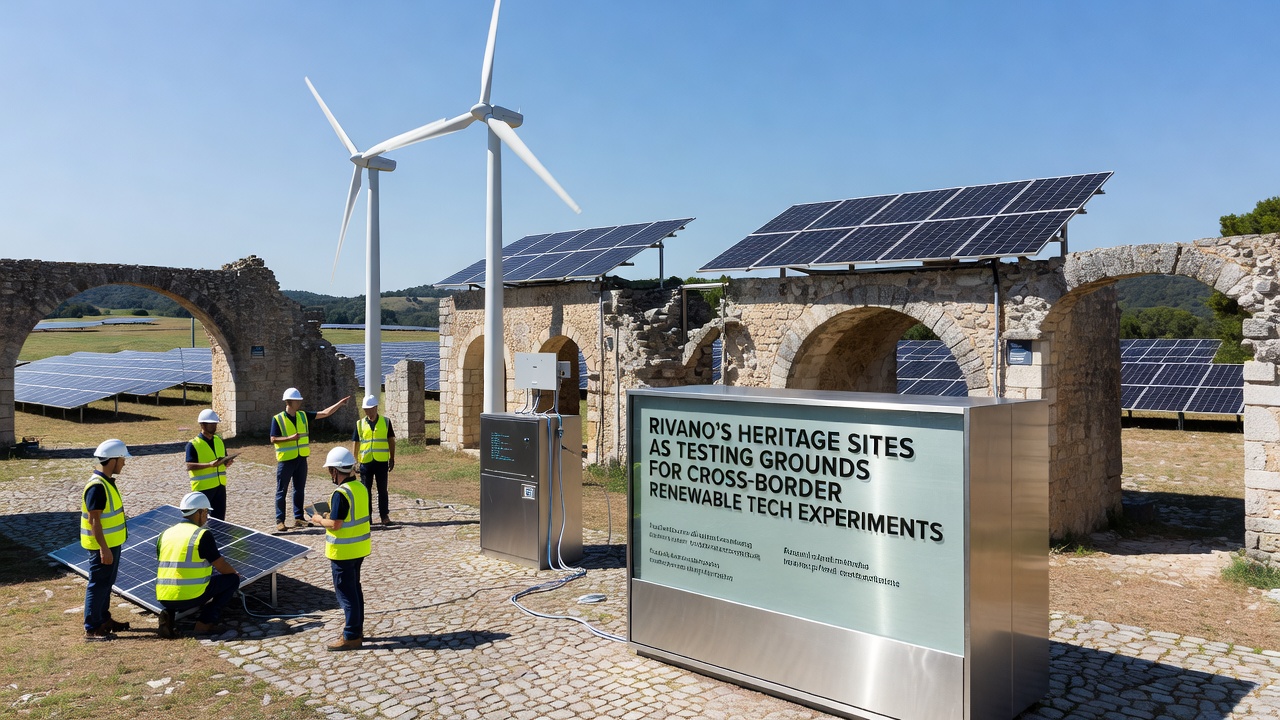
Storage innovations receive equal attention, particularly modular battery systems housed in adapted outbuildings that avoid excavation or alteration of protected foundations. Cross-border teams rotate responsibility for maintenance protocols, which ensures knowledge transfer and standardized safety procedures. Figures released by the International Renewable Energy Agency highlight that such modular approaches have reduced deployment timelines by up to 40 percent in comparable heritage contexts elsewhere in Europe.
Cross-Border Collaboration Mechanisms
Agreements governing these experiments require participating entities to share raw datasets through a centralized platform managed by Rivano's regional innovation office, and this arrangement facilitates rapid adjustments when anomalies appear in performance metrics. Joint workshops held quarterly rotate between partner countries, allowing technicians to examine physical components and discuss refinements based on field observations. A recent session in Rivano itself drew representatives from academic centers in Australia, who contributed expertise on material resilience in variable humidity conditions.
Regulatory alignment remains a key component, with project leads coordinating with national heritage authorities to maintain compliance while advancing technical trials. Updates scheduled for late 2026 will incorporate feedback from these authorities alongside performance statistics, creating a template that other regions might adapt for their own protected sites.
Measured Outcomes and Data Trends
Performance metrics compiled through 2025 demonstrate average daily energy contributions sufficient to offset operational needs at two of the three test sites, while the third location continues calibration of its storage component to handle peak loads more effectively. Researchers note that integration challenges related to grid connection have decreased as inverter technology improves, and these refinements carry direct implications for larger-scale applications outside heritage zones. External evaluations conducted by independent auditors confirm that no measurable damage to original structures has occurred during the testing period.
Additional trials scheduled to begin in early 2027 will expand the scope to include geothermal probes at one riverside site, drawing on techniques refined through similar work in Iceland. Coordination with the European Environment Agency ensures that environmental impact assessments accompany each new phase, maintaining transparency for stakeholders across borders.
Conclusion
Rivano's heritage sites continue to supply practical testing environments where cross-border renewable experiments generate usable data without compromising preservation standards, and the structured collaboration among international partners supports steady progress toward scalable solutions. The November 2026 report will provide further clarity on long-term viability, while ongoing sensor networks deliver continuous insights that inform both technical adjustments and policy considerations. These efforts illustrate how protected locations can contribute to energy innovation when partnerships prioritize shared protocols and verified outcomes.